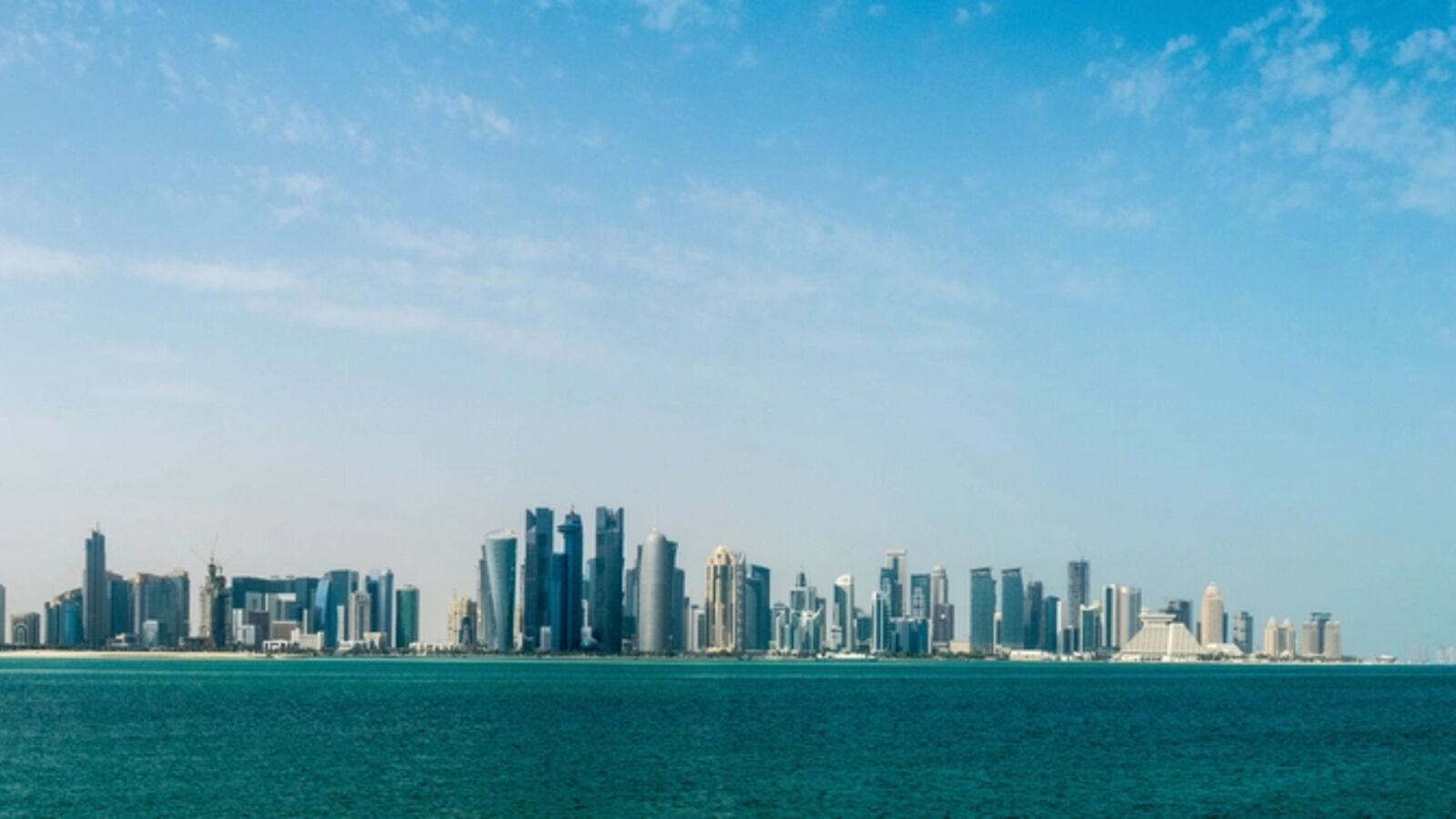
The tax-free countries in the Middle East are the six Gulf Cooperation Council (GCC) states: the United Arab Emirates, Saudi Arabia, Qatar, Kuwait, Bahrain and Oman. None of them taxes employment income as of October 2026, and none has a general capital gains or inheritance tax on individuals.
That picture is changing at the edges. Oman has passed a personal income tax that starts in 2028 for high earners. Four of the six states charge VAT. The UAE now has a federal corporate tax, and most of the region applies a 15% minimum tax to large multinational groups from 2025. Beyond the Gulf, Israel and Türkiye tax residents on worldwide income but offer long exemptions on foreign income to some newcomers.
This guide sets out what each country taxes, what it does not, and what "tax-free" leaves out.
Key takeaways
- The UAE, Saudi Arabia, Qatar, Kuwait and Bahrain have no personal income tax on salaries in 2026. Oman has none until its new law takes effect on January 1, 2028.
- Oman's law will tax residents at 5% on income above OMR 42,000 a year, making it the first GCC state to tax personal income.
- VAT is 5% in the UAE and Oman, 10% in Bahrain and 15% in Saudi Arabia. Qatar and Kuwait have not introduced it.
- Business income is a separate question: the UAE charges 9% corporate tax above AED 375,000, and foreign-owned companies pay income tax in most Gulf states.
- Israel and Türkiye are not tax-free, but both have long exemptions on foreign income for qualifying new residents.
The Gulf at a glance
| Country | Personal income tax | VAT | Main business tax | 15% minimum tax for large groups |
|---|---|---|---|---|
| UAE | None | 5% | 9% above AED 375,000; 0% for qualifying free zone income | From 2025 |
| Saudi Arabia | None on employment | 15% | 20% on the foreign-owned share; zakat on the Saudi and GCC share | Not confirmed |
| Qatar | None on salaries | None | 10% on the foreign-owned share | From 2025 |
| Kuwait | None | None | 15% on foreign companies | Yes (law issued December 2024) |
| Bahrain | None | 10% | No general corporate tax; 46% on oil and gas | From 2025 |
| Oman | None until 2028; then 5% above OMR 42,000 | 5% | 15% (3% for qualifying small businesses) | Parent-company rule from 2025 |
Figures are from national law as summarized by PwC's Worldwide Tax Summaries, last reviewed between July and September 2026.
United Arab Emirates
The UAE has no personal income tax at federal or emirate level. Wages, personal investment income and income from personal real estate investments are not taxed. A person who runs a business in their own name is a different case: once total business turnover exceeds AED 1 million in a year, that business income falls under the 9% corporate tax.
Companies pay 0% on the first AED 375,000 of taxable income and 9% above it. Qualifying Free Zone Persons can pay 0% on qualifying income, while their other income is taxed at 9%. From 2025, a domestic minimum top-up tax brings large multinational groups up to 15%.
For people who want a UAE tax residency certificate, Cabinet Decision No. 85 of 2022 sets the tests, according to PwC's UAE residence summary. A person is resident if their usual residence and center of financial and personal interests are in the UAE, if they spend 183 days or more there in a 12-month period, or if they spend at least 90 days and also hold UAE or GCC nationality or a UAE residence permit, plus a permanent home or job in the UAE. Our guide to UAE freelance visas and tax residency certificates covers the practical steps, and the UAE Golden Visa guide covers long-term residence.
Saudi Arabia
Saudi Arabia has no individual income tax on employment income. Business income is taxed at the company level: the share of profits owned by non-Saudi, non-GCC shareholders is taxed at 20%, while the Saudi and GCC share pays zakat at 2.5% of the zakat base. VAT is 15%, the highest in the Gulf, and a 5% real estate transaction tax applies to property sales. The country also runs a Premium Residency scheme for investors and skilled foreigners.
Qatar
Qatar does not tax employees' salaries, wages or allowances. Self-employed people may owe income tax on qualifying income from Qatari sources. Companies pay a flat 10% on profits attributable to foreign ownership, while companies wholly owned by Qatari and resident GCC nationals are generally not subject to it. Qatar has not introduced VAT, according to PwC's Qatar summary, although a GCC framework exists for one.
Kuwait
Kuwait does not impose personal income tax on individuals, and it has not introduced VAT. According to PwC's Kuwait summary, the GCC VAT framework was still under discussion in parliament. Foreign corporate bodies doing business in Kuwait pay a flat 15% tax on their profits. In December 2024 Kuwait issued a decree-law that applies a domestic minimum top-up tax to multinational groups with revenue of at least EUR 750 million.
Bahrain
Bahrain has no personal income tax, and capital gains of individuals are not taxed. It also has no general corporate income tax, according to PwC's Bahrain summary. The exceptions are a 46% tax on oil and gas businesses and, from 2025, a 15% top-up tax on large multinational groups. VAT is 10%. Other costs include social insurance contributions for employers and a 10% municipality tax, paid by landlords, on property rented to expatriates.
Oman: the first Gulf income tax
Oman is the exception to watch. Royal Decree No. 56/2025, published in June 2025, introduces a personal income tax from January 1, 2028. According to PwC's Oman summary, tax residents, both Omani citizens and expatriates, will pay 5% on worldwide taxable income above OMR 42,000 a year after eligible deductions. Non-resident Omani citizens will be taxed only on income from Oman.
The threshold means most salaried residents will not owe the tax. Even so, it is a structural change: a Gulf state will tax residents on worldwide income for the first time. Oman already charges 5% VAT and 15% corporate tax, with 3% for qualifying small businesses.
Beyond the Gulf: Israel and Türkiye
Neither country is tax-free. Both tax residents on worldwide income at progressive rates, with a top rate of 50% in Israel after surtax and 40% in Türkiye. Both, however, offer long exemptions on foreign income to some newcomers.
- Israel gives new immigrants and senior returning residents a 10-year exemption on foreign income. People who become resident after December 31, 2025 must report that exempt foreign income, according to PwC's Israel summary. PwC also reports a separate exemption on employment or business income for 2026 to 2030 that may be available to people who become resident between November 5, 2025 and December 31, 2026, subject to detailed rules.
- Türkiye introduced a regime under Law No. 7582 that exempts the foreign-source income of qualifying new residents for 20 years, without a requirement to declare it, according to PwC's Türkiye summary. PwC reports that applicants must not have been resident in Türkiye in the previous three years and that inheritances within the period are taxed at a reduced 1%.
What tax-free does not cover
A Gulf residence can reduce a person's tax bill, but several costs and rules remain.
- Indirect taxes and fees. VAT, property registration fees, municipality taxes and residence permit fees can add up. Dubai, for example, charges a 4% property registration fee.
- The previous country. Moving to the Gulf does not on its own end tax residence elsewhere. Countries such as the UK apply their own residence tests, and the US taxes citizens wherever they live. Our article on whether tax-free Dubai is the only option for British expats looks at this from a UK angle.
- Proof of residence. Banks and foreign tax authorities may ask for a tax residency certificate. Our guide to tax residency certificates explains when they are needed.
- Change over time. Oman's income tax and the region's new corporate taxes show that today's rules are not permanent.
For a comparison with other regions, see our guides to countries with no personal income tax and low-tax countries in Asia.
Frequently asked questions
Which Middle East countries have no income tax?
The UAE, Saudi Arabia, Qatar, Kuwait and Bahrain have no personal income tax on salaries in 2026. Oman has none until 2028, when a 5% tax on income above OMR 42,000 begins.
Will the UAE introduce personal income tax?
There is no personal income tax in the UAE as of October 2026, and no law to introduce one has been published. The UAE did introduce a 9% corporate tax in 2023, which can apply to individuals who run businesses with turnover above AED 1 million.
Do expats in Saudi Arabia pay income tax?
Not on salaries. Income from employment in Saudi Arabia is not taxed. Expats who own a share of a Saudi company are affected by the 20% corporate income tax on the foreign-owned share of profits.
Is Qatar tax-free for foreigners?
Qatar does not tax salaries and has no VAT. Self-employed people may owe tax on Qatari-source business income, and foreign-owned companies pay 10% on their profits.
Does living in Dubai mean I pay no tax at all?
Not necessarily. The UAE does not tax personal income, but a person can remain taxable in their previous country if they keep ties there or are a US citizen. Indirect taxes such as 5% VAT also apply.
Important: This article is general information, not tax, legal or financial advice. Rules change often and depend on your personal circumstances. Speak with a qualified professional in each relevant country before you act.