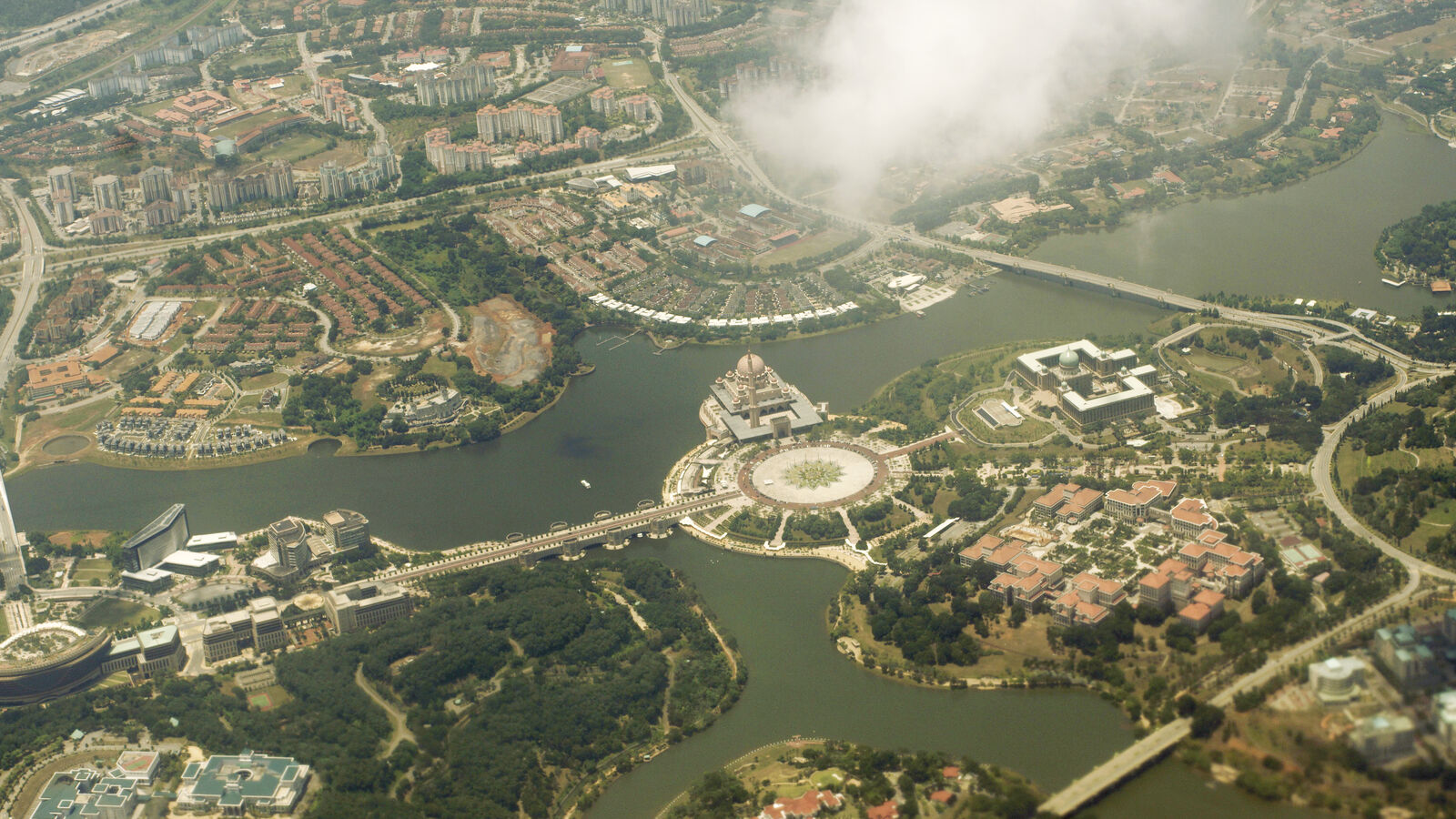
The DE Rantau Nomad Pass is Malaysia’s visa for digital nomads. It lets remote workers and freelancers live in Malaysia for 3 to 12 months, with one renewal of up to 12 more months, for a maximum of 24 months. The income bar is low by global standards for tech roles, at US$24,000 a year, and higher for other professions, at US$60,000.
The pass is run by the Malaysia Digital Economy Corporation (MDEC), a government agency, together with the Immigration Department. All figures in this guide come from the official DE Rantau page and MDEC’s FAQ, version 10.0, dated August 28, 2026, which we checked in October 2026.
Below you will find who qualifies, what the full cost looks like, how the application and endorsement steps work, and what the official FAQ says about tax.
Key takeaways
- Tech and digital professionals need US$24,000 a year in income. Listed non-tech roles, such as founders, finance and sales managers, need US$60,000.
- The processing fee is RM1,080 for the main applicant and RM540 per dependent, including 8% sales and service tax. It is not refunded if the application fails.
- Approval takes about 6 to 8 weeks, then a separate endorsement step in Malaysia issues the e-Pass.
- Spouses, children under 18 and parents can join as dependents, but spouses cannot work on the pass.
- MDEC’s FAQ says remote workers who stay 61 days or more may be taxable in Malaysia, and endorsement requires an income tax registration slip.
What the DE Rantau Nomad Pass is
Legally, the pass is a Professional Visit Pass (Pas Lawatan Ikhtisas). It allows multiple entries and covers stays in Peninsular Malaysia and the Federal Territory of Labuan. Holders can still visit Sabah and Sarawak, but the FAQ says they enter those two states on a tourist pass.
The pass is open to all nationalities except citizens of Israel. The main applicant must be over 18. Your passport must have more than 14 months of validity when you apply, so people with older passports often renew them first.
You can apply from anywhere, and you do not need to be in Malaysia. You can also stay in Malaysia on a tourist visa while MDEC reviews your file. However, a tourist pass cannot be converted into a DE Rantau pass. If you are approved while in the country, you must leave and re-enter to complete the process.
Who can apply: tech and non-tech talent
MDEC splits applicants into two groups, each with its own income threshold.
| Category | Example roles | Minimum annual income |
|---|---|---|
| Tech talent | Software and backend engineers, UX and UI designers, cloud, cybersecurity, blockchain, AI, machine learning and data roles, digital marketing, digital content creation | US$24,000 |
| Non-tech talent | CEO or founder, COO, CFO, business development, marketing, sales, finance, HR, legal counsel, public relations, consultants, customer service, tax specialists, supply chain managers and similar | US$60,000 |
Within each group, you can be a remote employee of a foreign company or a freelancer and independent contractor. For employees, the employer must not be registered in Malaysia. Freelancers may work with foreign clients and, according to the FAQ, may also serve Malaysian clients.
Proving your income
MDEC is specific about evidence. All documents must be in English or come with a certified translation, and contracts must have started at least three months before you apply.
Remote employees usually provide:
- A signed employment contract that shows the remote arrangement, job title, salary and the foreign employer’s details.
- Payslips for the last three months.
- Bank statements for the last three months that match the payslips.
- A confirmation letter from the employer, which is optional but useful.
Freelancers usually provide:
- Signed client contracts that set out the scope of work, duration and payment terms.
- Invoices for the last three months, with proof of payment through a bank, PayPal, Stripe, Wise or a similar service.
- Bank statements for the last three months.
- A portfolio, website or client testimonials, which are optional.
Content creators paid by a platform rather than under client contracts can submit platform records to show the income source. MDEC warns that inconsistent names or figures across documents can lead to rejection.
Fees and the sponsor bond
The DE Rantau cost has several parts, paid at different stages. These are the amounts in the FAQ, as of October 2026.
| Item | Amount | When you pay |
|---|---|---|
| Processing fee, main applicant | RM1,080 (includes 8% SST) | On application, non-refundable |
| Processing fee, each dependent | RM540 (includes 8% SST) | On application, non-refundable |
| Immigration pass fee | RM90 per 3 months, or RM360 for one year | At endorsement |
| Multiple-entry visa charge | Varies by nationality | At endorsement, if it applies |
| Personal or security bond, if MDEC is your sponsor | RM200 to RM2,000, depending on nationality | Before endorsement, refunded when the pass expires |
Every pass holder needs a sponsor. This can be a company registered in Malaysia that gives you work. If you do not have one, MDEC acts as the sponsor. In that case you sign a personal bond agreement and pay a refundable deposit. The bond table sets RM2,000 for US and Canadian citizens, RM1,500 for most European nationals, and RM1,000 for Japanese and South Korean citizens, among other rates.
Step by step: from application to e-Pass
- Register on the DE Rantau portal and submit the online application with your documents and the processing fee.
- Wait for the assessment. MDEC quotes 6 to 8 weeks, longer if it asks for more documents.
- Receive the approval letter. It is valid for six months and cannot be extended.
- If your nationality needs a visa for Malaysia, get an eVISA or a Visa with Reference (VDR), as stated in the approval letter.
- Enter Malaysia through a manual immigration counter, not the autogate, so that you get the entry stamp that endorsement needs.
- Within one month of entry, upload the endorsement documents: the signed bond or declaration, a copy of every passport page, your entry stamp, your visa if any, health insurance that covers Malaysia, and an income tax e-registration slip from the Inland Revenue Board (LHDN).
- Pay the pass fees and stay in Malaysia until the e-Pass is issued, usually within a week.
Renewals can be filed up to three months before the pass expires and take another 6 to 8 weeks. Since August 1, 2026, MDEC no longer accepts appeals against rejected applications. Applicants can apply again later instead.
Bringing your family
Only immediate family members of the main pass holder can apply as dependents:
- A husband, wife or common-law partner.
- Children, adopted children or stepchildren under 18.
- Disabled children of any age, verified by experts.
- The main pass holder’s parents.
Dependents can arrive with you or later. Their applications are assessed separately, so approval of the main applicant does not assure approval for the family. A spouse cannot work in Malaysia on the dependent pass. Children who go to school need a student pass arranged through the school, although homeschooled children do not.
Practical limits to plan around
Banking is the most common surprise. The FAQ states that most Malaysian banks do not accept a Professional Visit Pass for opening an account. Many holders keep using foreign accounts and cards, so it helps to check before you arrive which documents your preferred bank accepts.
Health insurance is required at endorsement, and the policy must cover Malaysia for the full pass period. Costs vary widely by age and cover, as our overview of private health insurance costs by country shows.
MDEC also warns applicants not to book non-refundable flights, sign leases or pay school fees before approval and endorsement are complete.
What MDEC says about tax
The FAQ includes a tax section prepared with references to Malaysia’s Income Tax Act 1967. It is a summary, not a ruling, and it is worth reading in full. In short:
- Remote employees paid from abroad: the FAQ says there is no Malaysian tax if you stay 60 days or fewer. From 61 days, the employment income becomes taxable in Malaysia, subject to any tax treaty, and the rate depends on whether you are tax resident.
- Freelancers with foreign clients: the FAQ points to the general rules on business income and residence status.
- Freelancers with Malaysian clients: payments are subject to a 10% withholding tax, or a lower treaty rate, for the first 182 days. After that, the income is taxed as resident business income, with credit for the tax already withheld.
Malaysian tax residence generally turns on spending 182 days or more in the country in a year, along with some other tests. Our explainer on the 183-day rule shows why a day count alone rarely settles where you are tax resident. Your home country may also keep taxing you. For questions about your own case, the Inland Revenue Board runs the MyTax portal, where the income tax registration is also done.
DE Rantau compared with MM2H and nearby options
The DE Rantau pass is a work-from-Malaysia permit for up to two years. Malaysia My Second Home (MM2H) is a long-stay residence program with deposit and property rules, aimed at wealthier residents. You can follow recent changes in our update on MM2H applications in 2026. For the general difference between the two kinds of program, see golden visa vs digital nomad visa.
In the region, Malaysia is cheaper to qualify for than Japan, which needs ¥10 million of annual income for a six-month stay. It is close to Indonesia on income for non-tech roles. See our guides to the Japan digital nomad visa and the Indonesia E33G remote worker visa.
Frequently asked questions
How long can I stay on the DE Rantau Nomad Pass?
The pass is valid for 3 to 12 months. You can renew it once for up to 12 more months, for a maximum of 24 months in total.
Can I apply for the DE Rantau pass while in Malaysia?
Yes, you can apply from inside or outside Malaysia. But you cannot convert a tourist pass. If you are approved while in Malaysia on a tourist pass, you must leave, get any required visa and re-enter to complete endorsement.
Can my spouse work in Malaysia on a DE Rantau dependent pass?
No. The FAQ states that a spouse cannot work in Malaysia under this pass.
Is the DE Rantau processing fee refundable?
No. Since May 1, 2025, the processing fee is non-refundable for every outcome, including rejection, cancellation and withdrawal. Immigration pass fees paid at endorsement are not refunded either.
Can I live in Sabah or Sarawak with the DE Rantau pass?
The pass covers Peninsular Malaysia and Labuan. You can travel to Sabah and Sarawak, but you enter those states on a tourist pass.
Source checked in October 2026: MDEC’s DE Rantau Pass FAQ, version 10.0.
Important: This article is general information, not tax, legal or financial advice. Rules change often and depend on your personal circumstances. Speak with a qualified professional in each relevant country before you act.