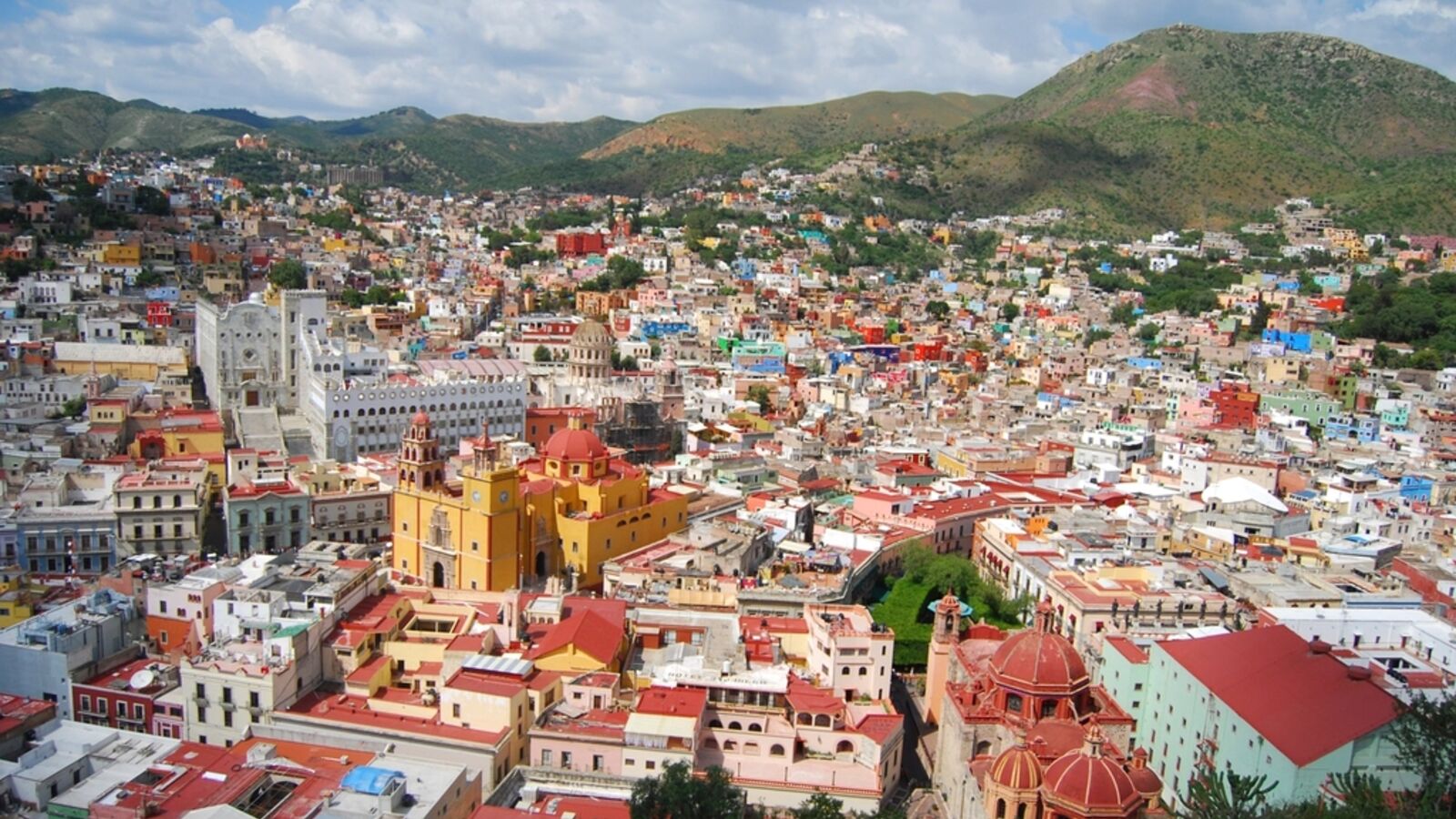
Mexico does not have a dedicated digital nomad visa. Remote workers who want to live there for more than a tourist stay usually apply for temporary residency based on economic solvency, a status that allows stays of more than 180 days and up to four years.
The test is financial. Applicants show either a steady monthly income or a large savings balance, both measured in days of Mexico's minimum wage and converted to dollars by each consulate. For 2026, the Mexican consulate in San Diego, for example, asks for income of at least US$4,049 a month over the last six months or an average balance of at least US$68,241 over the last twelve months.
The process has two stages: a visa at a Mexican consulate abroad, then a residence card from Mexico's National Migration Institute (INM) after you arrive. This guide walks through both, plus the tax questions that come with living in Mexico. Figures were checked against consulate documents in October 2026.
Key takeaways
- Mexico has no digital nomad visa. Temporary residency by economic solvency is the main long-stay route for remote workers.
- You apply at a Mexican consulate outside Mexico, then exchange the visa for a residence card at an INM office within 30 days of arrival.
- Income and savings thresholds are set in days of minimum wage, and each consulate publishes its own dollar figures.
- Temporary residency can last up to four years, after which holders can generally apply for permanent residency.
- Mexican tax residency depends mainly on where your home and center of vital interests are, not on your immigration card.
Why Mexico has no digital nomad visa
Many remote workers spend time in Mexico as visitors. The visitor status allows stays of up to 180 days, but the immigration officer at the border decides how many days to grant, and it is not always the maximum. Visitors are not meant to treat Mexico as a long-term base, and repeated border trips to restart a stay carry risks that our guide to visa runs explains.
For anyone planning to spend most of the year in Mexico, temporary residency is the standard alternative. It is not designed only for remote workers. The same category covers retirees, people with savings and others who can support themselves without a Mexican job. Remote workers fit because they can show steady income from abroad.
Mexico temporary residency requirements
Mexico's immigration guidelines set two ways to prove economic solvency, as consulates such as the one in Douglas, Arizona, explain:
- Monthly income above the equivalent of 300 days of the general minimum wage, received over the last six months, from employment or a pension.
- Savings or investments with an average monthly balance equal to 5,000 days of the general minimum wage over the last twelve months.
Consulates convert these formulas into their local currency, and the results vary by consulate and by year. Two examples:
| Consulate | Monthly income test | Savings test | Visa fee |
|---|---|---|---|
| San Diego (2026 sheet) | US$4,049 for six months | US$68,241 average for twelve months | US$56 |
| New York (2025 sheet) | US$4,200 for six months | US$71,500 for twelve months | US$54 |
The differences come from the wage figure and the exchange rate each consulate uses. Always work from the current checklist of the consulate where you will apply. The San Diego consulate's 2026 requirements sheet is a good example of the format.
Documents consulates usually ask for
- A completed visa application form and one passport photo.
- A valid passport, plus copies of the data page and pages with stamps.
- Proof of legal status in the country where you apply, if you are not a citizen there.
- Original bank statements with an official bank stamp or bank letter, showing your full name and address.
- For employees, proof of employment. San Diego asks for a letter on company letterhead, signed by a supervisor, that states your role, salary and the employer's agreement with your plan to live in Mexico and work remotely.
- Apostilles and Spanish translations for some foreign documents.
That San Diego employer letter is notable. It shows that at least some consulates expect remote employees to use this route and want the employer on record.
Income or savings: which route?
Employees with a steady salary often use the income route because six months of payslips and statements are easy to produce. Freelancers with uneven income sometimes find the savings route simpler, because it looks at an average balance rather than monthly deposits. Some couples apply with one spouse as the main applicant and the other as a family member, which may involve additional proof at some consulates.
How to apply, step by step
- Book a consulate appointment. Appointments are made through the Mexican foreign ministry's MiConsulado system at citas.sre.gob.mx. You must apply outside Mexico, and many consulates only serve people who live in their area.
- Attend the interview. A consular officer reviews your file, interviews you in English or Spanish and takes biometrics. San Diego says it may take up to ten business days to decide.
- Receive the visa. The temporary resident visa is a single-entry visa placed in your passport. You must use it to enter Mexico within its validity, usually 180 days.
- Enter Mexico. At the border, the officer records that you are entering to exchange the visa for a residence card.
- Exchange the visa at INM. Within 30 calendar days of entry, you file the exchange (canje) at an office of the National Migration Institute (INM), pay the card fee, give fingerprints and later collect your card.
Missing the 30-day window is a common and costly mistake. In many cases it means starting again at a consulate abroad.
Card length and renewals
The first card is usually issued for one year. Before it expires, holders can renew it with INM for one, two or three more years, up to four years in total. INM card fees rise with the length of the card and are updated each year under Mexico's federal fees law.
After four years of temporary residency, holders can generally apply for permanent residency, which does not need renewal. Some people who meet higher income or pension thresholds can apply for permanent residency directly, but that route is mainly used by retirees.
Can you work remotely on temporary residency?
Temporary residency by solvency does not include permission to work for a Mexican employer. Holders who receive a Mexican job offer can apply to INM for a work permission.
Remote work for a foreign employer or foreign clients is a different situation. Mexican immigration law was not written with remote work in mind, and practice has developed around it. The San Diego consulate's request for an employer letter about remote work suggests consulates accept it as a source of solvency. If your situation is unusual, such as Mexican clients or a local business, the work permission question becomes more important.
Employers have their own questions to ask. A company with staff living in Mexico long term may face payroll or corporate tax issues there. Our guide to permanent establishment risk when you work remotely covers this from the employer's side.
Mexico tax rules for remote workers
Holding a residence card does not by itself make you a Mexican tax resident, and not holding one does not prevent it. Under Mexico's Federal Tax Code, an individual is tax resident if they have established a home in Mexico. If they also have a home in another country, they are resident in Mexico when their center of vital interests is there. That is generally the case when more than half of their total income comes from Mexican sources, or when their main center of professional activity is in Mexico.
Mexican tax residents are taxed on worldwide income, with individual income tax rates reaching 35% at the top. Residents generally register with the tax authority, the SAT, and obtain a tax ID (RFC).
For a remote worker who rents an apartment in Mexico and lives there most of the year, the home test is the one that usually matters. Mexico has tax treaties with many countries, including the United States and Canada, and their tie-breaker rules can decide which country gets to tax you as a resident when both claim you. Our explainers on how tax authorities decide where you live and on treaty tie-breaker rules cover the concepts. People in this position often ask a Mexican tax adviser before they sign a long lease.
How Mexico compares with other options
Mexico's income bar is higher than the nomad visas in Colombia or Brazil, and it requires a consulate visit. In exchange, temporary residency lasts up to four years and leads to permanent residency, which most nomad visas do not. For a comparison with other programs, see our list of digital nomad visas in 2026 and our overview of golden visas in Latin America.
Frequently asked questions
Does Mexico have a digital nomad visa?
No. Mexico has no visa designed only for digital nomads. Remote workers usually choose between a visitor stay of up to 180 days and temporary residency based on economic solvency.
How much income do I need for Mexican temporary residency in 2026?
It depends on the consulate. The formula is income above 300 days of minimum wage per month for six months, or savings of 5,000 days of minimum wage over twelve months. San Diego's 2026 sheet sets this at US$4,049 a month or a US$68,241 average balance.
Can I apply for temporary residency from inside Mexico?
In general, no. The solvency route starts with a visa at a Mexican consulate abroad. After you enter Mexico with that visa, you exchange it for a residence card at INM within 30 days.
How long does Mexican temporary residency last?
Up to four years. The first card usually lasts one year, and holders can renew for one to three more years. After four years, they can generally apply for permanent residency.
Will I pay tax in Mexico as a temporary resident?
Not automatically. Mexican tax residency depends on where your home and center of vital interests are. If you become tax resident, Mexico taxes worldwide income, so a Mexican adviser can help you check your position.
Important: This article is general information, not tax, legal or financial advice. Rules change often and depend on your personal circumstances. Speak with a qualified professional in each relevant country before you act.