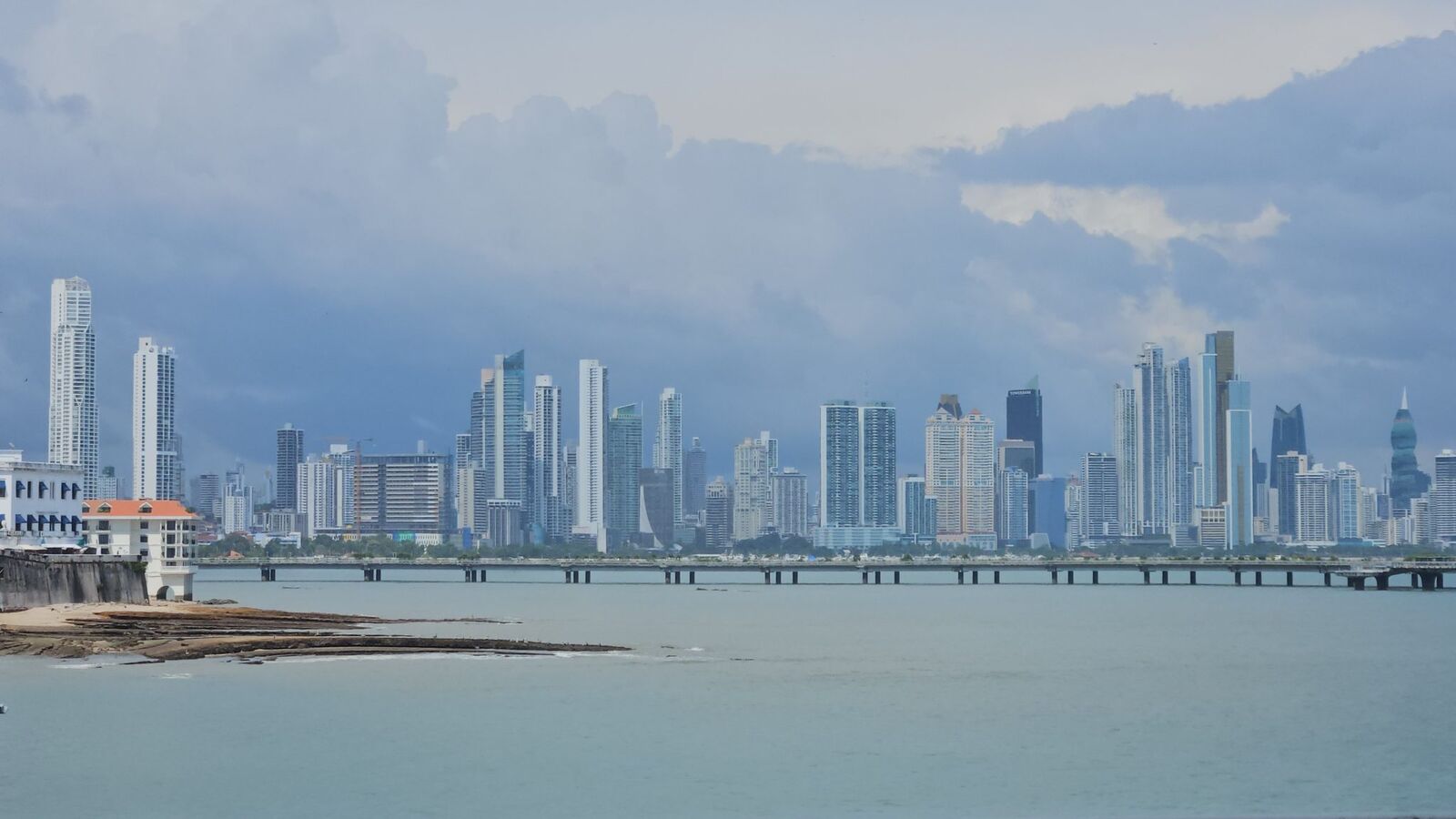
Latin America is home to many of the world's territorial tax systems. In a territorial system, a resident pays income tax only on income that comes from inside the country. Panama, Costa Rica, Paraguay, Bolivia, Honduras, Nicaragua, Guatemala and El Salvador all work broadly this way, which is why the region keeps coming up in conversations about low-tax countries for remote workers, retirees and investors.
Low-tax does not mean no-tax. Local income is taxed, sometimes at rates of 25% or 30%, and VAT, property taxes and fees apply as usual. Some countries also tax certain types of foreign income, and several have tightened their rules in recent years.
This guide compares the main low-tax options in Latin America as of October 2026, explains the catches, and points out where the larger economies have gone the other way.
Key takeaways
- Panama, Costa Rica and most of Central America, plus Paraguay and Bolivia, tax individuals mainly on local-source income.
- Uruguay and the Dominican Republic are hybrids: foreign capital income can be taxed, but new residents get temporary relief.
- Chile taxes residents on worldwide income but exempts foreigners' foreign income during their first three years.
- Brazil and Colombia have moved the other way, with new taxes on offshore investments, dividends and wealth.
- A territorial system only helps if a person actually stops being tax resident in their previous country, which depends on that country's rules.
Why territorial taxation is common in Latin America
Worldwide taxation means residents pay tax on income from everywhere. Territorial taxation means the country only taxes income it considers locally sourced. Many Latin American countries kept the territorial model as their tax codes developed, and several smaller economies still use it today.
For someone who earns from foreign investments or pensions, the difference matters. Under a territorial system, a dividend from a foreign company or interest from a foreign bank account is usually outside the local tax net. Under a worldwide system, the same income would be taxable, with credit for any foreign tax.
The hard part is the word "source". Countries define it differently, and work performed while physically in the country can count as local income even if the client is abroad. Our list of territorial tax countries explains these sourcing rules in more detail.
Latin American tax systems at a glance
| Country | How residents are taxed | Top rate on local personal income | Point to know |
|---|---|---|---|
| Panama | Territorial | 25% | Foreign-source income is outside the tax |
| Costa Rica | Territorial | 25% (self-employed scale) | Foreign income not tied to the local economy is generally not taxed |
| Paraguay | Source-based | 10% | Low flat-style rates; 8% on capital gains |
| Bolivia | Source-based | 13% flat | No tax on foreign-source income of individuals |
| Honduras | Territorial | 25% | Home of the Próspera special economic zone |
| Nicaragua | Source-based | 30% | Taxes only income originating in Nicaragua |
| Guatemala | Source-based | 7% on employment income | Low rates on local salaries |
| El Salvador | Source-based | 30% | Taxes Salvadoran-source income |
| Dominican Republic | Mostly territorial | 25% | Foreign investment income taxed from the third year |
| Uruguay | Source-based plus foreign capital income | 36% on work income | 11-year tax holiday on foreign capital income for new residents |
| Chile | Worldwide | Progressive | Foreigners taxed only on Chilean income for three years |
Rates are for 2026 and come from national law as summarized by PwC's Worldwide Tax Summaries. Brackets and thresholds change every year.
Panama
Panama taxes citizens and residents only on Panamanian-source income, so income from abroad is outside the tax, according to PwC's Panama summary. Local income is taxed at 0% up to US$11,000, 15% up to US$50,000 and 25% above that. Interest on Panamanian savings accounts and time deposits is exempt.
The rules for companies are moving. Panama now requires members of multinational groups that earn foreign passive income to meet substance requirements to keep a 0% rate on it. Our analysis of Panama's substance rules covers what this means for small business owners. Panama's residence permits, including the Qualified Investor route, are a separate question from its tax rules.
Costa Rica
Costa Rica taxes income from assets, goods or services located or used in the country. Income earned abroad by a resident is generally not taxable if it is not related to Costa Rica's economic structure, according to PwC's Costa Rica summary. Self-employed income is taxed on a progressive scale that tops out at 25%, and local capital gains are taxed at 15%, with an optional 2.25% rate on the first sale of certain assets, subject to conditions.
Costa Rica also offers a digital nomad stay for remote workers who earn from abroad. See our Costa Rica digital nomad visa guide for the income threshold and tax treatment.
Paraguay
Paraguay taxes residents and non-residents on Paraguayan-source income. The personal income tax on services runs at 8% on the first PYG 50 million of net income, 9% up to PYG 150 million and 10% above that, and no tax is due if gross income from personal services stays under PYG 80 million. Capital gains are taxed at 8%, according to PwC's Paraguay summary.
Paraguay is also known for its accessible residence permits. A permit is not the same as tax residence, and a Paraguayan certificate does not on its own end residence elsewhere. Our article on why Paraguay offers residency, not tax residency explains the difference, and the Paraguay page covers the residency process.
Central America and Bolivia
Several other countries in the region tax individuals only on local income:
- Honduras describes its tax system as based on a territorial concept of income. Local income is taxed at up to 25%.
- Nicaragua taxes income that originates in Nicaragua, with a top resident rate of 30%.
- Guatemala taxes pay for services rendered in Guatemala at 5% up to GTQ 300,000 and 7% above.
- El Salvador taxes income earned in the country, with a top rate of 30% for domiciled individuals. In 2025 it raised its annual tax-free amount to US$6,600.
- Bolivia charges a flat 13% complementary tax on local income, and no Bolivian tax applies to foreign-source income earned by individuals.
These countries differ a lot in banking access, residence options and legal stability. A low headline rate is only one factor in where people choose to live.
Hybrid systems: Uruguay and the Dominican Republic
Uruguay taxes residents on local income and, since 2011, on capital income from foreign entities at 12%. From January 1, 2026, the scope widened to include gains on foreign assets. New residents can opt out of tax on that foreign capital income for the year they arrive plus ten more years, if they meet one of three conditions. Our guide to the Uruguay tax holiday for new residents covers the 2026 rules.
The Dominican Republic taxes Dominican-source income and, for residents, income from foreign investments and financial gains. According to PwC, new residents are taxed on that foreign income only after their third year of residence. The top rate on local income is 25% in 2026, and PwC reports a new 27% bracket from 2027.
Chile: a temporary break for newcomers
Chile taxes residents on worldwide income. Foreigners who move to Chile are taxed only on Chilean-source income during their first three years, after which worldwide income becomes taxable. This makes Chile a short-term option at best for people with significant foreign income.
The large economies have gone the other way
Brazil and Colombia, two of the region's largest economies, have expanded their taxes on residents in recent years.
- Brazil taxes residents on worldwide income. Law 14,754 of 2023 brought income from foreign financial investments, controlled entities and trusts into a separate 15% annual charge from 2024. Law 15,270 of 2025 added a 10% withholding from January 2026 on dividends above BRL 50,000 a month paid to one resident individual, plus a minimum tax on high incomes, according to PwC's Brazil summary.
- Colombia has an annual wealth tax on individuals with net wealth above 72,000 UVT, with rates up to 1.5% through 2026. The government announced a broader version for 2026 that was under constitutional court review earlier this year.
Mexico, Argentina and Peru also tax residents on worldwide income. People comparing the region often find that the smaller economies offer the most favorable rules.
What a territorial system does not settle
Moving to a low-tax country solves one half of the problem. The other half is the country a person leaves.
- Leaving the old system. Most countries have their own residence tests, and some keep taxing former residents for years. The US taxes its citizens wherever they live. Our guide to tax residency for digital nomads explains the main tests.
- Where work is done. Remote work performed while living in a territorial country may count as local-source income there. The answer depends on that country's sourcing rules and, for companies, on where management happens.
- Reporting. Banks in Panama, Costa Rica, Uruguay and many other countries in the region report account information to other countries under the Common Reporting Standard. Lawful planning assumes full reporting.
One option some nomads look at in this region is Honduras tax residency through Próspera, a special economic zone on Roatán. Its Lump Sum Tax Regime is a flat US$5,000 tax per year, residents spend seven days a year inside Próspera, and certificates are issued through the e-Próspera portal. As with any residence, whether it changes a person's tax position elsewhere depends on the rules of their previous country. The Honduras tax residency page has the details.
Frequently asked questions
Which Latin American country has the lowest taxes?
It depends on the type of income. For foreign investment income, territorial countries such as Panama, Costa Rica and Paraguay generally do not tax it at all. For local salaries, Paraguay's top rate of 10% and Bolivia's flat 13% are among the lowest in the region.
Does Panama tax foreign income?
No. Panama taxes citizens and residents only on Panamanian-source income. Income from abroad, such as foreign dividends or rent from a property in another country, is outside Panamanian income tax.
Does Paraguay tax foreign income?
Paraguay taxes income from Paraguayan sources. Income from activities, assets or rights used in Paraguay is taxable, and certain personal services performed abroad for Paraguayan taxpayers count as local. Other foreign income is generally outside the tax.
Is Uruguay still a low-tax option after the 2026 reform?
It can be for new residents who qualify for the tax holiday. The holiday still lasts eleven years, but from 2026 it requires 183 days of presence each year, a property investment of roughly US$2 million, or annual fund contributions of roughly US$100,000.
Does moving to a territorial country mean I stop paying tax at home?
Not automatically. Each country applies its own residence rules, and some tax citizens or former residents regardless of where they live. People in this position often ask an adviser in both countries before they move.
Important: This article is general information, not tax, legal or financial advice. Rules change often and depend on your personal circumstances. Speak with a qualified professional in each relevant country before you act.